Monthly Archives: August 2010

5 Tips for Camping with Children

Camping is a fun activity for your family. But what if you go with children? This may mean added responsibility on your end. But you do not have to worry. You can definitely still have fun in nature even with your kids running around.

Below are 5 tips to help you and your children enjoy the outdoors.

1. When you’re with older children, plan with them. Ask them where they want to go and what they want to experience. Involve them in the process so they both learn how to plan and also so they get to do things of interest to them.

2. When you’re with younger children, it’s best to have a “test” camping situation in your backyard before you actually go to the site. Teach your kids how to set up the tent. If they’re older, you can even teach them how to cook (while protecting the environment). In this way, they’ll learn skills that will last a lifetime and that they can teach their own kids someday.

3. Children must familiarize themselves with how to survive in the outdoors. Guide them. Teach them about safety and outdoor ethics. And just because you’re at a camping site, it does not mean that the chores end there. Show them ways to protect the environment by bringing reusable jars, rather than plastic bags, for their mouthwash and toothpaste. Tell them to not spit in the river or the lake.

4. Make sure you pack appropriately. When you’re with tykes, bring lots of extra shoes and clothes. Expect them to get wet and dirty. Bring insect repellent and sunscreen. Keep the first aid kid in your bag. You can also bring those travel toys like pocket scrabble or checkers in order to keep them entertained.

5. Ask your child if he or she wants to bring a familiar toy. A stuffed bear or a blanket will give the child a familiar sense of home in the tent as camping, particularly during the first time, can seem unnerving to a child.

Camping with children can be a challenge, but the reward’s are many fold the difficulties.  Not only will camping allow you to bond with your child, it will also give you the opportunity to teach him or her to enjoy and help protect nature.

If you have a family, you have to read Maeyahn’s piece about camping with kids at state parks site NDParks.com.

Related Posts:
Considerations for the best camping tents
Camping Cooking Tips You Must Know

For your next camping trip, you can impress your fellow campers by showing them your efficient cooking skills. Not a cook? Well it is not as hard as you think. You do not need a kitchen and the usual cooking utensils to prepare a delectable meal that you can enjoy while outdoors.
I’ve provided you 8 simple camping cooking tips below. To learn more, read on!

1. Decide what you want to prepare and measure ingredients in advance of every meal. Pack these in Ziploc bags and label appropriately. This will make it easier to stay organized as you cook.  Remember – if you are organized, you can better focus on making the meal taste good.

2. You can bring soups and stews. Just prepare ahead. Freeze these and keep in a cooler. Reheat them when it’s time to eat.

3. When cooking, cover pots. This will cook the food faster. Another reason for this is to keep insects and dirt out of your food.

4. For quick meals, use instant foods such as freeze dried noodles. They prepare fast and generally only require boiled water.

5. When cooking hamburgers and hotdogs, put holes in the middle of the buns for faster grilling. Be warned though – watch them closely so they don’t burn.

6. You can prevent marshmallows from sticking together by adding powdered sugar to the bag you store them in. The sugar forms a barrier that keeps the marshmallows separate. Further, and perhaps more important, who wouldn’t want extra sugar on their marshmallows?

7. When making egg sandwiches, cook your eggs in a canning ring. This will help give them those rounded, “professional egg sandwich” shape. Why does shape matter? For some reason, the mind associates good looking food with good tasting food.

8. Use a crock pot to save time. Prepare and start your dinner every morning before you go and do your activities. You will be delighted to see your food ready once you get back. Further, as the ingredients simmer throughout the day, the various flavors will run together, which will create an amazing blend for your taste buds.

Camping is fun. But, like most things in life, it’s even better with good food!

Maeyahn writes for state parks sites NDParks.com, where you can read her latest posts on how to choose folding camping chairs and picking camping lanterns.

Searching For a Poison Oak Cure?

Poison oak is a plant that causes a rash to develop upon the skin on contact. This poison oak skin rash later develops into a series of blisters and these blisters can vary in severity. Poison oak cures are designed to alleviate the symptoms associated with the rash, typically the itching and blistering. There are a number of different poison oak cures to try out. Let us discuss a few of these.

The first poison oak cure to try is cooling the rash. This should effectively relieve itching. A common way in which to cool the rash is to soak a cloth or small towel in cold water and hold it on top of the rash. Alternatively, a cold bath could be run to soak in to aid relief of the itching or ice placed directly on to the areas affected. It is often recommended that oatmeal soap be added to the bath to aid better relief.

The second poison oak cure is the use of calamine lotion. This product can be purchased in pharmacies and drugstores in your locality for an affordable price. The product is dabbed onto the affected area where it will help to reduce itching and dry up blisters, letting new skin develop once the dry skin flakes off.

The final poison oak cure is the use of a paste made from vinegar and baking soda. This will have to be created in the home. Vinegar and baking soda must be mixed together to create a paste similar in consistency to peanut butter. This paste can then be applied directly to the skin, left to rest and then washed off with cool water.

There are just a few poison oak cures to try. However, keep in mind that the above cures may not work for you. Furthermore, when using products such as calamine lotion, remember to read the instructions provided on the bottle before applying the product to the skin. If ever in doubt, consult with your Doctor.

Camping and Hiking Holidays: 4 Safety Tips

When taking camping and/or  hiking holidays, safety prevention becomes extremely important.  If your planned girl getaways include any trail hiking, then there are some very valuable safety precautions that should be followed during your hiking adventure.  It is very important that you follow these guidelines because it can come down to a matter of life or death.  There are four important safety tips that will help keep you safe and in top physical condition while enjoying nature with your friends.

The first and probably the most crucial tip that applies to any of your hikes is preparation.  It is extremely important that you always plan and prepare the hiking route in advance.  Know the estimated time to complete the trail you plan on hiking.  Be sure to communicate all the details of your hike with someone at your base camp, just in case you or your entire party does not return to your campsite in a timely manner.  Accidents can and do happen when you are out on the trail or in the wilderness.  If a person at camp knows you are late returning, they can quickly send a search party out to look for you.  It is always good to be safe rather than sorry.

The second safety tip will help you to keep in good physical condition while on your hiking tour.  Be sure to carry an adequate amount of drinking water for use while hiking, it does not matter how short the trail might be, always carry a bottle of water.  Keeping your body hydrated is much more important than having something to eat because our bodies are comprised of up to 80% water.

The third tip has to do with what you wear.  It is essential that you always wear appropriate protective gear.  Be sure to pack suitable clothing for warm weather as well as waterproof gear to provide protection and help prevent hypothermia.  If you happen to be hiking in areas with warm weather, you will want to be diligent about apply sufficient sunscreen and be sure to carry it along with you while hiking.

Finally, the last tip is to always bring a map and compass with you when hiking.  If you are the kind of girl who likes gadgets, then bring a GPS device along (See recommended handheld GPS units).  This will help prevent you from being lost while out on your hiking adventure.

It is important to remember these four simple tips while on your hiking vacation or get-away.  These tips will be important for your personal safety and if you fail to follow these tips, it may result in an accident with either you or one of your friends.  Fatalities can occur, so be safe while hiking.

Effects of climate change on polar bears

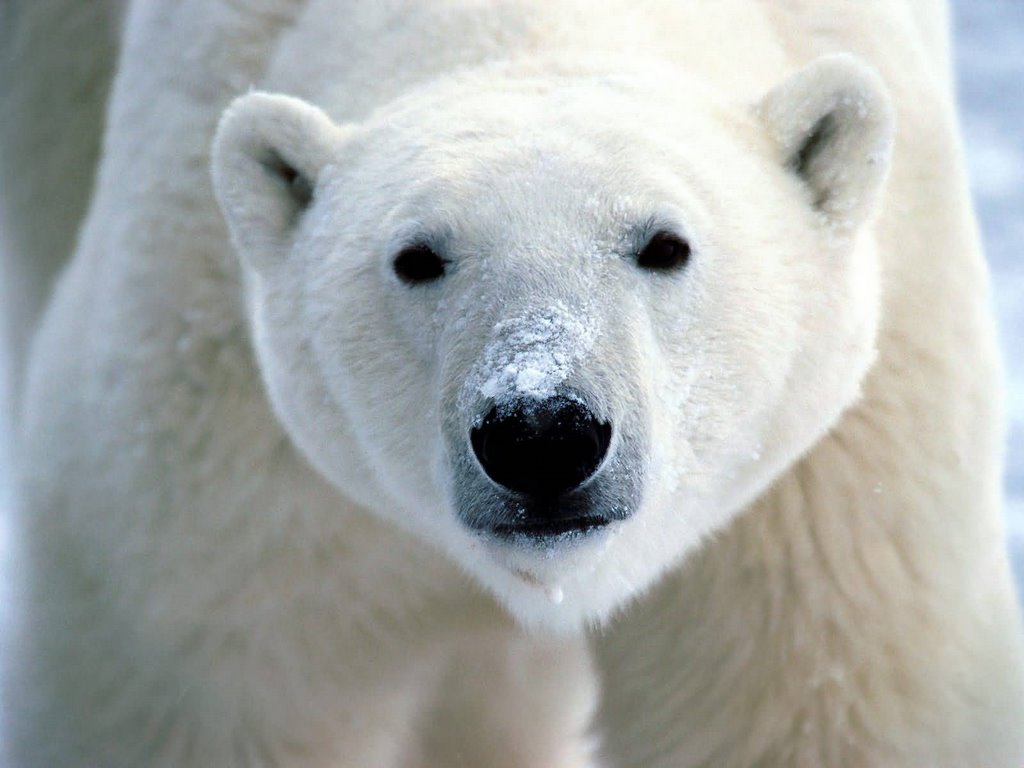
Polar bears (Ursus maritimus) are in the news again because of dire predictions for the coming decades on their population numbers. The effects of climate change have been predicted to impact the polar regions first and most dramatically according to most models, and indeed, it is at the poles where we are recording some of the most dramatic examples of climate change. Polar bears, being the largest of the living bear species, are charismatic and popular, and because of the likely impact that climate change will have on them they have become a poster species for the climate issue.

polar bear

Polar bear, Ursus maritimus.

In a recent interview bear expert Andrew Derocher predicted that one population of polar bears (western Hudson Bay) could see its numbers drop too low to be viable within three decades (Yale Environment 360 2010). We have explored polar bears and their populations in other posts. Here I want to examine why changes in sea ice and warmer periods are such a concern for polar bears.

Polar bears evolved relatively recently, diverging from an ancestral brown bear population about 150,000 years ago (Lindqvist et al. 2010). There is a unique population of brown bears that live on Admiralty, Baranof, and Chichagof (ABC) islands of southeastern Alaska’s Alexander Archipelago. This population, called the ABC bears, is the closest brown bear relatives of the polar bears—early members of this population split off to live full time on the sea ice, evolving into the modern polar bear species. Thus, polar bears are an example of rapid mammalian evolution, undergoing morphologic changes such as elongated snouts, overall size changes, furry padded feet, and color changes, as well as social and metabolic changes to adapt to the rhythms of the arctic seasons.

It is their complex adaptations to living on the rugged ice that makes them most susceptible to changes in that habitat. They use the ice as a platform for hunting seals, as a habitat for finding mates and mating, and for traveling long distances. As the ice breaks up earlier in the spring, and re-freezes later in the winter, several weeks of prime hunting time are taken away from the polar bears. Today, they are able to spend almost three weeks less on the ice hunting than they were able to several decades ago. This is critical because after the ice breaks up for the year, the bears must fast until the next season, and longer times of open water means long fasting periods.

This can be critical for a female bear that must gestate her young, birth them, and begin to nurse them to a size large enough that they can accompany her onto the ice for hunting the next season. So, she is expending a great deal of energy in contributing to the growth of her young while fasting. If she did not build enough fat reserves the year before to withstand this metabolic marathon, she and her offspring will not survive into the following year. A few additional weeks of having to fast can be the difference between life and death.

The intimate connection that polar bears have evolved with their arctic habitat means that they are finely tuned to changes in that world. And with the effects of climate change appearing in the arctic regions first, they are in fact akin to the “canary in the coal mine,” a harbinger of things to come.

References:

Lindqvist, C., S. C. Schuster, Y. Sun, S. L. Talbot, J. Qi, A. Ratan, L. P. Tomsho, L. Kasson, E. Zeyl, J. Aars, W. Miller, Ó. Ingólfsson, L. Bachmann, and Ø. Wiig. 2010. Complete mitochondrial genome of a Pleistocene jawbone unveils the origin of polar bear. Proceeding of the National Academy of Sciences.

Yale Environment 360. 2010. For Hudson Bay polar bears, the end is already in sight. http://e360.yale.edu/content/feature.msp?id=2293.

Additional related posts:
Polar Bear Populations
Public Opinion and a Geologic Perspective on the Effects of Global Warming
IPCC